WHAT IS BARBERSHOP?
In simple terms, barbershop harmony is vocal harmony produced by four parts; lead, tenor, bass and baritone. It is different from any other kind of choral or group singing. It is sung a cappella (without musical accompaniment) and it is one of the most challenging and satisfying forms of music for a singer.
Sue Holmes - Tenor 
Tenor is the harmony part sung consistently above the lead. Although tenor is highest part sung in Barbershop, it should not be confused with soprano of conventional singing groups. The tenor should have a light, clear, pure tone that will compliment, but not over power the lead voice.
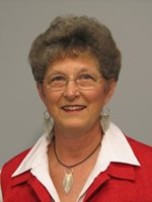
Sue has been a Sweet Adeline since 1986. For 24 years she has sung in Kamloops with the Desert Sounds Harmony Chorus (previously Rainbow Chorus). She has been quarteting for 14 years, four years with Accord Quartet and 10 years with After 8 and has appeared on regional contest stage many times. She is tenor section leader, a member of the board, has held positions as Secretary & Treasurer, takes care of our gaming applications and funds, takes care of our by laws and rules and is our trusty pitch pipe blower. Her favorite song right now is " Midnight Rose" and her biggest pet peeve is not having her opinion acknowledged.
Sue enjoys quartet singing because she loves the purity of four voices each singing a different part; being the only one responsible for her part;being a part of the creative process when when the quartet discusses interpretation of each song and writes scripts for performances; being able to perform spontaneously because all you need are the 4 voice parts and a pitchpipe (acapella & unplugged).
Gisela Rymer - Lead -
Lead is the melody and is sung in the range between A below middle C and C above middle C. Lead singers need to be accurate singers with a full authoritative sound. All the rest of the harmony parts hang onto the lead's melody to tune and create the barbershops chords. Most harmony singers hate to admit it, but the lead really is the most important part, as it is after all the melody and is what people are listening for when being entertained.

Tracey Pointer - Bass
Bass singers should have a rich mellow voice and be able to sing the E flat below middle C easily. Basses should not be confused with the alto of conventional groups. Many altos can sing the bass part, but are much better suited to lead or baritone. Because the barbershop style calls for basses to sing notes that are strong components of the chords, the bass part is really the foundation of the barbershop sound.

Tracey sings Bass and was recently appointed the Region 26 Quartet co-ordinator. She also recently was presented with the Desert Sounds Harmony Chorus Sweet Adeline of the year award for year 2009/2010. She joined the chorus in 1982, shortly after moving from Vancouver. She and her husband saw both men's and ladie's choruses at a spring show and they both joined immediately. She had no stage or choral experience, but knew she could carry a tune and wanted to sing great harmony. She started singing as a lead, moved to baritone a couple of years later, but then decided to become a bass, she knew she was home. She has a great bass voice. She sang with "Pot of Gold" quartet for several years and got hooked on quartetting. Later she joined with Janice, Sandy and Sue in 1997 to form "After 8" and has been bass in this quartet ever since. She loves quartetting because it makes her take responsibility for her part and she feels it has undoubtedly made her a stronger singer. She has held just about every executive position on the Board and is currently bass section leader and our official script writer and performance package creator. Her second love is theater, and she was instrumental in collaborating the Desert Sounds 30th Anniversary dinner theatre production in conjuction with the Kamloops Players. She was the chorus nominee for the "Spirit of 26" award in 2006 or 2007. Currently her favourite songs are Midnight Rose (quartet) and Paint Your Wagon medley (chorus). She is cursed with several pet peeves, usually involving tempo and dynamics within the chorus.
In her non Sweet Adeline life, she is blessed with a handsome successful son who has given her three lovely grandsons. She also has a very understanding husband who also loves barbershop and is very supportive of her chorus life. She loves the the blissful liberation of retirement and says LIFE is good.
Janice Caravan - Baritone
Baritones cover approximately the same range as the lead. The baritone harmony notes cross the lead notes sometimes sung below and sometimes sung above. Baritones must constantly adjust their balance to accommodate their position in the chord. Many call the baritone part the "garbage part" because the musical line is often quite tricky. Most baritones prefer to think of their part as vocal gymnastics and the glue that makes the chord happen. It is a very difficult part to sing.

Janice joined the chorus in July of 1991 at the age of 24. Having no formal musical training or experience, but a natural talent and passion for singing, she started singing in the lead section and was section leader soon after. After singing lead for about six years, Janice felt the pull towards baritone and joined the baritone section in 1997. Of course, it wasn't long before she was section leader of the baritones. In 1997, she joined up with Tracey Pointer, Sandy Tugnum, and Sue Holmes to form the quartet ""After 8".
Barbershop harmony is characterized by a "cone shaped" sound with the lower voices singing a wider more resonant tone. When all four parts are singing the correct notes and tuning them accurately, producing a tone that is appropriate for their placement in the cone and matching their vowels sounds, a wonderful thing happens! Those four tones produce a "ring" or "overtone" a "fifth" note that no one is actually singing but that we can all hear. To "lock and ring a chord" is the goal of every barbershop group and it is sure to give you goosebumps and bring on a big round of applause.
